
Asphalt Crack Filling & Crack Routing
Cracks in your asphalt are inevitable, especially in the Midwest, where freeze-thaw cycles, heavy traffic, and UV exposure take a toll on pavement year after year. The key is addressing them before they become costly structural failures.
At Rock County Sealcoat, we offer two levels of crack repair to match the severity of the damage: standard crack filling and crack routing. We’ll assess your pavement and recommend the right method based on an honest evaluation, not the upsell.
Crack Filling vs. Crack Routing — What’s the Difference?
Not all cracks are created equal — and not all crack repair methods are either. Understanding the difference helps you make the right decision for your pavement.
Crack Filling uses hot-pour rubberized sealant applied directly into the crack. It’s effective for smaller, stable cracks and is included as part of our standard sealcoating preparation on every job. It’s fast, affordable, and prevents water infiltration.
Crack Routing is a more thorough process. Before sealing, we use mechanical routing equipment to cut a uniform, clean channel along the crack — typically ½ inch wide and ½ inch deep. This removes loose, deteriorated material and creates a consistent reservoir for the sealant to bond into. The result is a repair that’s stronger, more flexible, and significantly longer-lasting than standard filling alone.
For commercial properties with high traffic loads, aging lots, or cracks that keep reopening, crack routing is almost always the right choice. It costs more upfront but dramatically outperforms standard filling over a 3–5 year maintenance cycle.
When to Get an Asphalt Crack Filling?
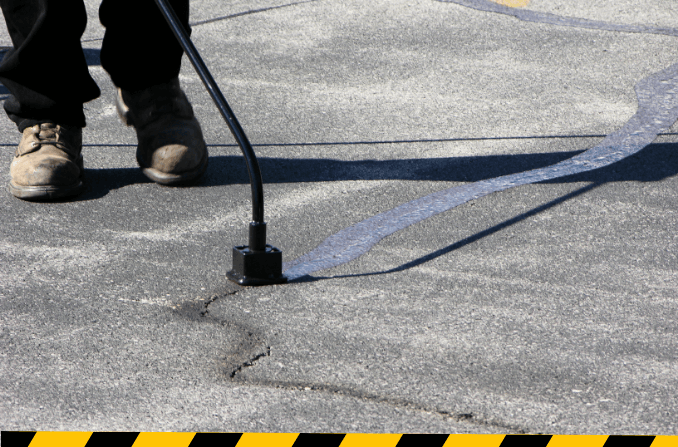
Don’t wait until small cracks become major headaches for your home or business. The best time to address asphalt cracks is when they first appear – typically in early spring after winter’s freeze-thaw cycles, or during fall before the harsh weather hits. Watch for cracks wider than 1/8 inch, spreading spiderweb patterns, or any signs of water pooling. Early intervention with professional asphalt crack filling can save you thousands in repairs down the road and extend your pavement’s life by up to 8-10 years!
Benefits of Asphalt Crack Sealing
- Prevents Water Damage: Asphalt crack sealing prevents water infiltration, reducing freeze-thaw damage in colder climates.
- Extends Pavement Lifespan: Prolongs the life of asphalt surfaces by preventing further deterioration.
- Improves Safety: Reduces the risk of accidents caused by uneven surfaces or large cracks.
- Cost-Effective Maintenance: Lower upfront cost compared to full pavement replacement or resurfacing.
- Enhances Aesthetic Appeal: Improves the look of surfaces by eliminating unsightly cracks and gaps.
- Increases Property Value: Well-maintained surfaces can increase curb appeal and property value.
Our Crack Repair Process
Regardless of which method is selected, our process begins the same way:
- Deep Cleaning: We use professional-grade equipment to remove all debris, vegetation, and loose material from every crack.
- Assessment: We evaluate the size, pattern, and severity of cracking to determine whether standard filling or routing is the appropriate solution.
- Routing (when applicable): For cracks that require it, we mechanically rout the crack to a uniform channel before sealing.
- Sealant Application: We apply hot-pour rubberized sealant that penetrates deep into the crack, creating a flexible, weather-resistant bond that moves with your pavement through temperature changes.
The result is a professional repair that protects your investment and extends the life of your pavement.

Get The Most Out Of Your Asphalt Parking
Lot – 100% Satisfaction!
We Provide A Full Range Of Asphalt Paving, Repair, & Maintenance Services
Why Rock County Sealcoat?
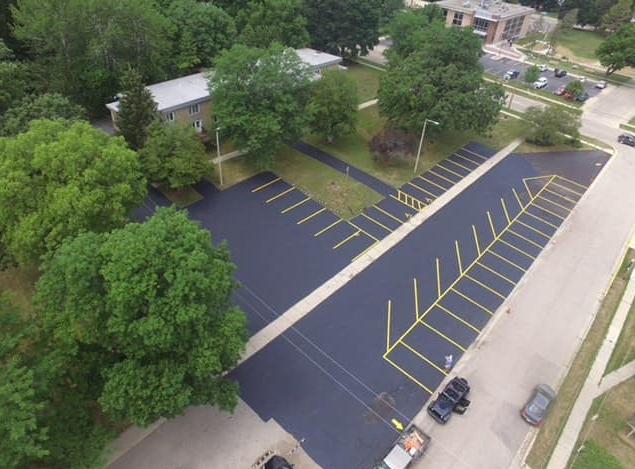
By partnering with us, you can have confidence that your pavement will be properly maintained, significantly extending its lifespan and preserving the polished, professional appearance of your parking lot or paved area.
Get in touch today for a free estimate!
Frequently Asked Questions
When is the best time to have my asphalt cracks filled?
The ideal time to address asphalt cracks is as soon as they appear, particularly in early spring after the winter freeze-thaw cycles or during the fall before harsh weather returns. You should specifically watch for cracks wider than 1/8 inch or “spiderweb” patterns, as early intervention can extend your pavement’s life by up to 8–10 years.
What kind of sealant do you use for crack filling?
We use a premium, hot-pour rubberized sealant. This industrial-grade material is designed to penetrate deep into the cracks and create a flexible, weather-resistant bond. Because it remains flexible after application, the sealant can move with your pavement during temperature changes without breaking the seal.
How does crack filling help prevent more expensive repairs?
Crack filling acts as a barrier that prevents water from infiltrating the subgrade of your asphalt. In the Midwest’s volatile climate, water that gets into cracks freezes and expands, leading to much larger potholes and structural failure. By sealing these openings early, you avoid the high costs of full pavement replacement or major resurfacing.
What is crack routing, and when do you recommend it?
Crack routing involves mechanically cutting a uniform channel along the crack before applying sealant. This removes loose, deteriorated material and creates a clean, consistent reservoir for the sealant to bond into. We recommend routing for commercial properties, high-traffic areas, cracks wider than ¼ inch, and anywhere cracks have been previously filled but continue to reopen. Routing costs more than standard filling but delivers a significantly stronger, longer-lasting repair.